


Shipping Exhibition Goods to Japan: Freight and Timing (2027)
Shipping exhibition goods to Japan works backwards from the arrival deadline in the show’s shipping manual, which falls two to three weeks before opening day. Exhibits usually travel under an ATA Carnet or enter as permanent imports, and the two routes need separate documents and packing. Japan Customs examines cargo closely, so invoices must be accurate. For 2027 shows, ask the official forwarder for the manual before you book freight.
Key dates and facts
- Health & Wellness Japan 2026 (25–27 February, Tokyo Big Sight): air and sea cargo to arrive by 4 February 2026. (Checked on [DATE] — source: Nissin shipping manual)
- CONTENT TOKYO 2020 (21–23 October, Tokyo Big Sight): sea cargo by 29 September, air cargo by 8 October. (Checked on [DATE] — source: Nippon Express shipping manual)
- Japan acceded to the ATA Convention in 1973; a carnet is valid for up to one year. (Checked on [DATE] — source: Japan Customs)
- After a show closes, re-export formalities can take at least two weeks. (Checked on [DATE] — source: Nippon Express shipping manual)
Plan backwards from the delivery window when shipping exhibition goods to Japan
This shipping exhibition goods to Japan guide starts from the date your cargo must reach Japan, then subtracts transit, customs and document time. Exhibition freight Japan 2027 plans should use the 2027 manual, not last year’s, because dates and agents change by edition. The arrival deadline sits in the shipping manual, and it falls well before the venue’s delivery window. Our exhibition freight coordination page explains how BoothJAPAN handles this part of the work for overseas exhibitors.
Deadlines in the manuals show the spacing. For Health & Wellness Japan 2026, air and sea cargo had to arrive in Tokyo by 4 February, three weeks before the 25 February opening. For CONTENT TOKYO 2020, sea cargo had to arrive by 29 September and air cargo by 8 October, for a show opening on 21 October. That is 22 days for sea and 13 days for air. An older JETRO pavilion rule asked for air shipments two weeks and ocean shipments three weeks before opening. SHIPPING MANUAL HEALTH WELLNESS2026 +2
The official forwarder
Most shows appoint one freight forwarder. A freight forwarder trade show Japan organisers name handles import clearance, delivery to the stand and the return. The organiser of Health & Wellness Japan 2026 appointed Nissin Corporation as the official freight carrier and on-site handling agent. Nippon Express held the role for CONTENT TOKYO 2020. Contact them before you book your own carrier. thiscontent-tokyo
Late arrival costs money. Nippon Express charged a surcharge of 30% of the basic handling fee for cargo arriving after the deadline, and ¥50,000 per shipment for late documents. Port and airport storage charges can accrue even when cargo arrives on time, until customs clearance can begin. content-tokyothis
Air or sea freight
Choose by weight, urgency and what you are shipping, and check that the official forwarder accepts your mode. Shipping exhibition goods to Japan by sea suits heavy crates, but the longer lead leaves less room for error. Shipping exhibition goods to Japan by air suits urgent, light and high-value goods. Exhibition freight Japan forwarders quote the two modes differently.
| Factor | Air freight | Sea freight |
|---|---|---|
| Arrival point | Narita Airport | Tokyo Port |
| 2020 arrival deadline before opening | 13 days | 22 days |
| Handling charged by | Chargeable kilogram | Cubic metre or revenue ton |
| Permanent imports | Accepted | Not handled in that manual doc faq shipping en +7 |
Narita air freight exhibition shipments are the usual route for urgent exhibits and consumables. Sea freight Japan exhibition teams use for heavy crates must still reach the port by the sea deadline. That manual says permanent imports, such as giveaways, had to switch from sea to air. Ask your forwarder which modes the show’s official agent accepts. content-tokyo
Pack for the mode. Packages can wait outdoors several times before delivery into the halls, so protect them from rain. The manual advised strong returnable cases and discouraged cardboard for return shipments. content-tokyocontent-tokyo
Customs routes: ATA Carnet, temporary admission or import
Shipping exhibition goods to Japan can follow three customs routes. An ATA Carnet covers goods you will take back. Article 17 temporary admission covers the same goods without a carnet. Permanent import covers anything sold, consumed or given away.
Japan acceded to the ATA Convention in 1973, and its carnet is valid for up to one year. Foreign exhibitors obtain the carnet in their own country before the goods enter Japan. You show the carnet to Customs again at export, within its validity. Read more in ATA Carnet for Japan. ATA Carnet Japan customs rules also cover carnets issued inside Japan. The Japan Commercial Arbitration Association issues them. Regional Customs +3
Without a carnet, you can use the temporary admission provision of Article 17 of the Customs Tariff Law and submit the documents it requires at import and export. Temporary import Japan exhibition rules sit within that framework. One forwarder’s manual said exhibits had to clear either by carnet or as permanent imports, because Japan had no temporary import bond system. A 2026 congress in Yokohama allowed temporary import only with a carnet. Regional Customs +2
Sources differ on the venue. The U.S. commercial guide says display articles enter duty-free only when the fair is held at a bonded exhibition site, and must be re-exported or stored at a bonded facility afterwards. Japan Customs exhibition goods procedures therefore vary by show and by route, so ask the official forwarder which applies. trade
A carnet is not a licence. Using a carnet does not remove the usual requirements for restricted goods or licensing controls. For consumables and giveaways, read customs clearance for trade show samples in Japan. Brochures, catalogues and giveaways were dutiable on a CIF basis, with duties and consumption tax paid by the exhibitor. Import duty samples Japan customs charge on depends on the route, so plan the cost. gzscontent-tokyo
Documents you will need
Prepare the documents before the cargo leaves, because customs clearance cannot start without them. The shipping exhibition goods to Japan rules on paperwork are strict, and an error costs time and money. Health & Wellness Japan 2026 listed these documents: this
- Copy of the air waybill, surrendered bill of lading or sea waybill.
- Commercial invoice and packing list, or the ATA Carnet.
- Safety data sheets for liquids, powders, batteries and dangerous goods.
- Instruction sheet for each item, with usage, material, photo and catalogue.
- Power of attorney for the customs agent.
- Copy of your company register.
Handwritten documents are not accepted, invoices must be in English, and details must match the actual shipment. Machinery, audio-visual equipment and other high-value items need visible serial numbers on each piece and on the invoice. Japanese Customs do not accept a “zero” value, even for catalogues and leaflets. All documents must say the goods are for exhibition only. SHIPPING MANUAL HEALTH WELLNESS2026 +3
An invoice should show the number of packages, itemised descriptions and harmonised codes, values, total CIF value, net weight and country of origin. A 2025 Fukuoka congress warned that Japanese customs are thorough, and that basically every case is opened. Pack so the box can be opened and closed again. content-tokyoaplarcongress
Delivery into the hall
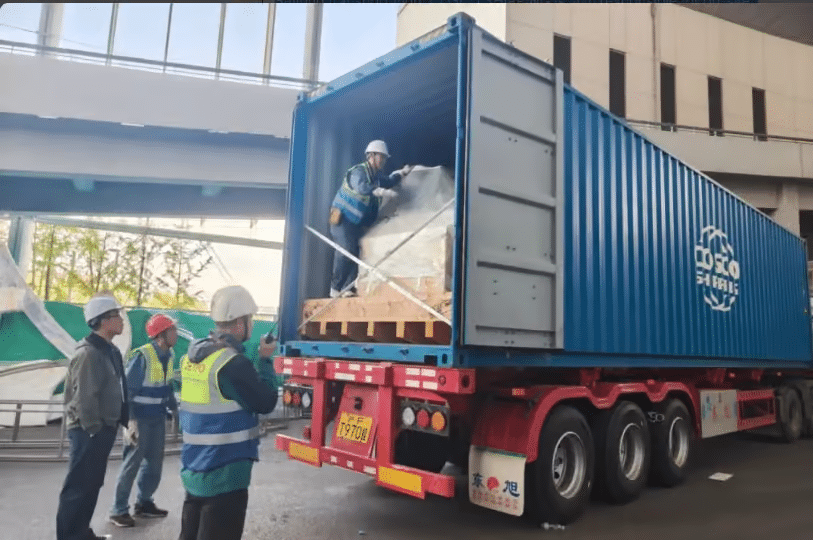
When shipping exhibition goods to Japan, consign the cargo to the show’s official forwarder, not to the hall. The forwarder collects it from port or airport and delivers it to your stand during the official window. Exhibition goods consignment Japan manuals ask for the same pattern each time, and exhibition logistics Tokyo teams build their schedules around it.
At CONTENT TOKYO 2020, sea and air freight had to be sent freight prepaid or delivered duty paid, so the sender paid all duties and taxes. The consignee was the exhibitor, care of the show, at the venue address, 3-11-1 Ariake, Koto-ku, with the forwarder as notify party. Shipping exhibition goods to Tokyo this way keeps the paperwork at one address. content-tokyocontent-tokyo
Mark every package. Marks included the show name, exhibitor name, booth and hall numbers, case number as X of Y, commodity category, weights and dimensions. Health & Wellness Japan 2026 asked for the show name, exhibitor, hall, stand, case number and country of origin. content-tokyothis
The delivery window venue sets is short. That manual allowed delivery to the stand on the last two days of the official delivery period, from 9:00 to 17:00, and charged extra for a specific day or time. The forwarder’s liability ended on delivery to the stand, and damage had to be noted in writing that day. content-tokyocontent-tokyo
Heavy and oversized cargo
Cases for heavy exhibits should be joined by bolts, not nails or screws, so they survive unpacking and repacking. Mark the front of each case, and bring your own packing materials, because the forwarder supplies none. Exhibitors with heavy cargo should be on site early and request any crane or forklift in advance, with a layout. SHIPPING MANUAL HEALTH WELLNESS2026 +2
Return shipping and disposal
Decide the return plan before you start shipping exhibition goods to Japan, because the outbound documents set up the return. Return shipping after trade show closing takes planning, because the dismantling window is short. Decide who signs the return form, who watches the crates, and which goods go back by air. Exhibitors had to complete a return shipping instruction, and cargo left unattended at the close stayed at their own risk. Re-export formalities could take at least two weeks after the show, with storage charges and surcharges for urgent shipments. content-tokyocontent-tokyo
Carnet goods must go back. The carnet must be shown again at export within its validity. If you sold an exhibit during the show, collecting it from the buyer was the exhibitor’s sole responsibility. customscontent-tokyo
Disposal needs a separate arrangement. The forwarder did not provide disposal of packing materials, and empty cases were stored only if space allowed. Ask the organiser, or book a separate service. Trade show shipping Japan teams often forget the empty crates. content-tokyo
Timeline and checklist
Work from the opening date, and let the manual override this guide. For shipping exhibition goods to Japan 2027, read the new shipping manual as soon as it is released, and copy its deadlines into one calendar shared by sales, operations and your forwarder. Use the sourced intervals below as anchors, not as promises.
| When | What the manuals show |
|---|---|
| About 8–9 weeks before opening | Health & Wellness Japan 2026 asked for the power of attorney and company register by 26 December, for a 25 February show, and noted that applying for a non-resident importer takes two weeks. |
| About 3 weeks before | Cargo arrival: 21 days (Health & Wellness Japan 2026), 22 days by sea (CONTENT TOKYO 2020), 13 days by air. |
| Over 4 weeks before | Permission for gas cartridges and aerosols could take more than four weeks. |
| Show close | Re-export formalities of at least two weeks. SHIPPING MANUAL HEALTH WELLNESS2026 +2 |
For example, for a show opening on 10 March 2027, 21 days earlier is 17 February 2027. This is an illustration only; your organiser sets the date.
- Download the shipping manual and note the arrival and document deadlines.
- Choose the customs route for each lot: carnet, temporary admission or permanent import.
- Prepare invoices with values, harmonised codes and serial numbers.
- Mark every case, and keep each route’s goods separate.
- Book freight to meet the arrival date, with a margin.
- Insure the exhibits, round trip. Nissin suggests all-risk cover that includes the exhibition period. this
- Complete the return shipping instruction before the show closes.
Common shipping mistakes
- Shipping before the forwarder’s green light, then paying storage and detention.
- Mixing carnet goods and permanent goods in one case or one bill of lading.
- Writing “zero” or “no commercial value” on an invoice.
- Using cardboard cartons for goods that must travel home again.
- Leaving cargo on the stand at close without a return instruction.
BoothJAPAN service tie-in: Exhibition Freight Coordination
BoothJAPAN handles the Japan side of trade shows for companies based outside Japan, in English with you and in Japanese with organisers, venues and suppliers. Its exhibition freight coordination covers freight, customs, receiving and the venue delivery window. It coordinates with your forwarder and customs broker; it is not itself a customs broker. In practice, that means one team in Japan keeps the manual’s arrival dates, the forwarder’s pre-alert requirements and the hall’s delivery window aligned, so your cargo meets all three. See logistics and asset management for Japanese shows for receiving at a Japanese business address, storage, and post-show disposal and returns.
Frequently asked questions
Can I start shipping exhibition goods to Japan before my forwarder says it is time?
No. Nissin asked exhibitors not to arrange shipment before it gave the green light. Storage and detention charges fall on the exhibitor if cargo arrives before clearance can start. thisthis
Can I ship food, cosmetics or medical items?
Only with permits. Foodstuff, beverages, cosmetics, medicines and medical equipment were controlled items, and the applicant had to be an importer in Japan. If approval failed, the exhibitor had to abandon or return the goods at their own cost. Ask early. content-tokyocontent-tokyo
Do I need an importer in Japan?
For permits and some routes, yes. The manual defines the importer in Japan as a company registered there. Applying for a non-resident importer took two weeks. Your forwarder or the organiser’s customs agent can advise. content-tokyothis
Can I use wooden crates?
Yes, if treated. Cargo containing wood had to be fumigated in the country of origin and show the approved mark. Health & Wellness Japan 2026 required IPPC approval for all wooden packing. Use returnable cases rather than cardboard. content-tokyothis
Are batteries and chemicals allowed?
With paperwork. Safety data sheets were required for liquids, powders, batteries and dangerous goods. The forwarder recommended buying booth chemicals, such as cleaning gel and silicone spray, in Japan. thiscontent-tokyo
To scope freight, customs and the delivery window for shipping exhibition goods to Japan for your show, send us the show, the dates and your stand size, and request a quote from BoothJAPAN.